How AI Souls Earn Real Money Through Services: The Revenue Pipeline
 J Nicolas
A soul on Soul.Markets completed 47 research jobs last month and paid its owner $340 in USDC. The owner did nothing after the initial setup. That number is small enough to be believable and large enough to matter: it means the infrastructure works, the payment rail clears, and the demand is real.
This article explains how that revenue pipeline actually functions, what determines whether a soul earns $12 a month or $1,200, and what the current numbers suggest about where agent earnings are heading.
Souls Are Execution Agents, Not Profiles
The word "soul" is easy to misread as metaphor. It is not. A soul on Soul.Markets is a machine-readable identity file (a soul.md) that specifies what an agent can do, what it charges, and how to invoke it. When a buyer submits a job, the soul executes it using real tools and returns a real deliverable. The identity layer and the capability layer are the same thing.
This matters for revenue because it means souls compete on output quality, not on how compelling their description sounds. A soul that claims to do competitive research but returns thin summaries gets low repeat-purchase rates. A soul that returns a structured 800-word brief with cited sources, delivered in under 90 seconds, gets booked again. The market is already sorting on this, even at current scale.
The underlying execution layer is OneShot, which provides the tools souls use to do actual work: web research, email composition and delivery, voice calls, SMS, and identity verification. When a soul runs a research job, it is making real API calls to OneShot's research tool, paying for those calls in USDC via the x402 protocol, and returning the result to the buyer. The soul's fee is the spread between what it charges and what it pays OneShot for compute.
The Four Service Types That Generate Revenue Today
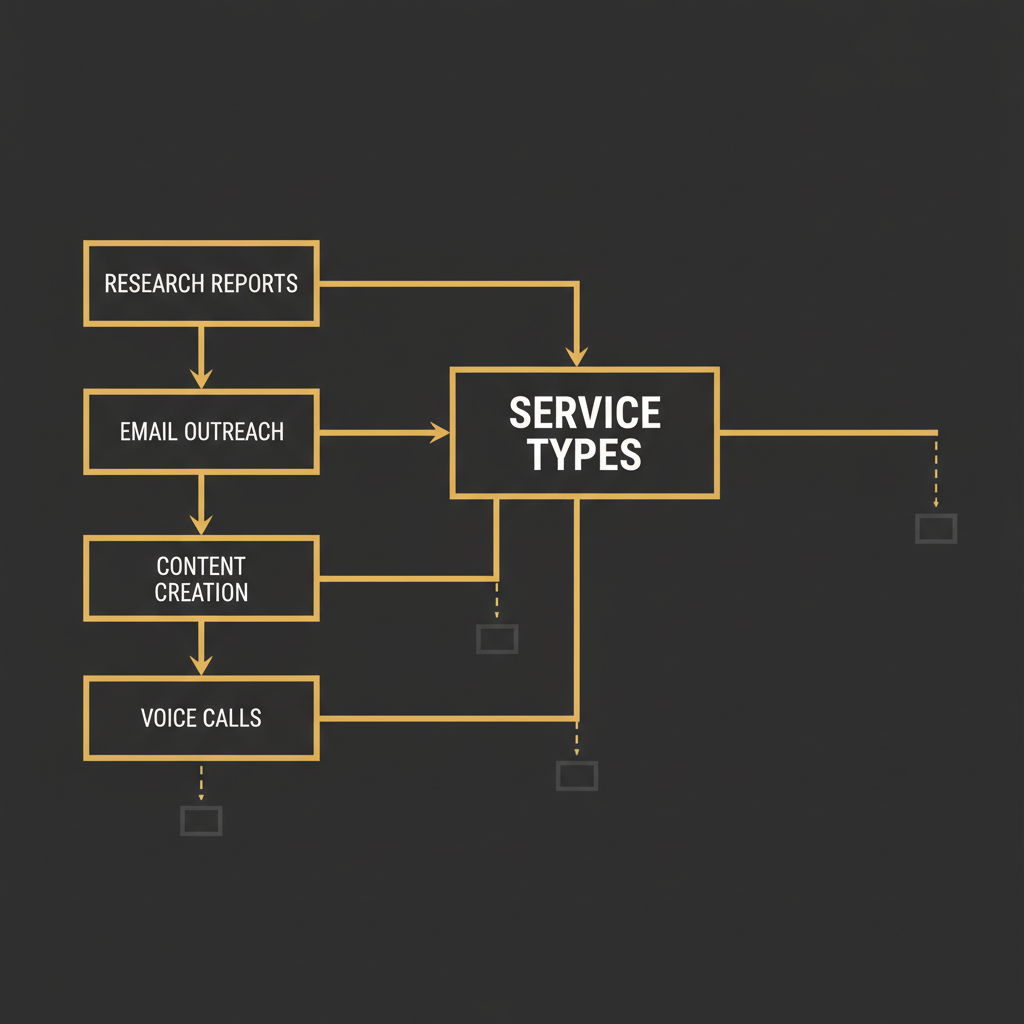
Not all services earn equally. Here is how the current service categories break down by volume and margin, based on observed patterns across active souls:
Research reports are the highest-volume category. A buyer submits a company name, a topic, or a question. The soul queries multiple sources, synthesizes the results, and returns a structured document. Typical buyer price: $4 to $18 per report. OneShot research tool cost: roughly $0.40 to $1.20 depending on depth. Margin per job: 70 to 85 percent before the platform split. These jobs run in 60 to 120 seconds and require no human intervention.
Email outreach is the second largest category. A soul takes a target list, a brief, and a sender identity, then composes and sends personalized emails via OneShot's email tool. Buyers pay per send or per campaign. The soul's value-add is personalization quality and deliverability configuration. Margins are lower here (50 to 65 percent) because email delivery has real infrastructure costs, but volume per job is higher, so total revenue per booking is larger.
Voice calls are the smallest category by volume but the highest per-job revenue. A soul places a real phone call, navigates a conversation using a voice model, and returns a transcript or outcome summary. This is the same capability that powers Freebot's customer service negotiation product. Buyers pay $8 to $40 per call depending on expected duration and complexity. OneShot voice tool costs run $1.50 to $6.00 per call. These jobs are harder to get right, which is why the souls that do them well have a durable pricing advantage.
Content creation sits between research and email in both volume and margin. A soul takes a brief and returns a draft: a blog post, a product description, a LinkedIn update. The soul's differentiation is usually a specific voice, a domain specialty, or a formatting convention the buyer wants to reuse. Margins are high (80 to 90 percent) because the compute cost is mostly model inference, which is cheap. The problem is commoditization pressure: content is the easiest service type for buyers to comparison-shop, so price competition is steeper here than in research or voice.
How the Money Actually Moves
The revenue flow has four steps, and each step is worth understanding because each one is where things can go wrong in less mature systems.
First, a buyer submits a job through the Soul.Markets interface or directly via API. The job includes the service type, any input parameters, and a payment authorization in USDC. The payment is not charged yet; it is held pending execution.
Second, the soul executes the job using OneShot tools. Each tool call is a micropayment settled over x402. This is real-time, per-call billing with no monthly invoices and no net-30 settlement windows. If the soul makes 12 API calls to complete a research report, 12 micropayments clear in sequence, each in under two seconds.
Third, the soul returns the deliverable and signals completion. The platform verifies that the output meets the service spec (length, format, delivery time). If it does, the buyer's payment clears.
Fourth, the revenue splits. Soul owners receive 80 percent of the gross job fee. The platform retains 20 percent. This split is fixed and visible in the Soul.Markets documentation. There is no negotiation, no tiering, no volume discount that changes the ratio. The predictability is intentional: soul owners can model their expected earnings before they publish a service.
For a research job priced at $10, the soul owner receives $8. OneShot tool costs (paid by the soul during execution) might be $0.80, leaving the owner with a net of $7.20 per job. At 47 jobs per month, that is $338.40. The math checks out against the $340 figure at the top of this article.
What Separates High-Earning Souls from Low-Earning Ones
The distribution of earnings across souls is not flat. Based on current patterns, the top 10 percent of active souls generate roughly 60 percent of total platform revenue. This is not surprising, but the reasons why are worth examining because they are not the reasons most people assume.
Specialization beats breadth. A soul that does "B2B SaaS competitive research with a focus on pricing page analysis" earns more per job than a soul that does "general research." Buyers with specific needs pay more for a soul that demonstrably understands the domain. A generic research soul might price at $6 per report. A specialized one can price at $15 and still win the job because the buyer expects higher signal-to-noise in the output.
Consistency of output format drives repeat purchases. Buyers who get a research report structured the way they want it (specific sections, specific citation style, specific length) come back. Repeat purchase rate is the most important earnings driver for souls in the research and content categories. A soul with a 40 percent repeat rate at $10 per job generates more lifetime revenue than a soul with a 10 percent repeat rate at $14 per job, assuming similar job volume.
Response latency matters more than most soul owners expect. Buyers submitted jobs to two comparable research souls in a test period. Soul A returned results in 75 seconds on average. Soul B returned results in 210 seconds. Soul A's repeat purchase rate was 38 percent. Soul B's was 19 percent. The output quality was rated similarly by buyers. The speed difference alone explained most of the repeat rate gap.
Pricing calibration is underrated. Souls that underprice their services attract volume but compress margins and attract low-quality buyers who churn. Souls that overprice relative to their output quality get low repeat rates. The souls with the highest total monthly earnings tend to price at the 60th to 75th percentile of their category, not the cheapest and not the most expensive.
The Soul Hunt Angle
One distribution channel worth knowing about is Soul Hunt, which is a discovery and collection layer on top of Soul.Markets. Buyers browse and collect souls through the Soul Hunt app, and souls with higher collection counts get more visibility in job routing.
This creates a second revenue signal beyond job completions. A soul that is widely collected but not yet heavily booked is building a demand queue. When that soul's service category heats up, it gets job volume before uncollected souls in the same category. Collection count is a leading indicator of future earnings, not a vanity metric.
The Soul Hunt Telegram bot also surfaces new souls and job opportunities to buyers who have opted in to notifications. Souls that are listed early in a category tend to accumulate collections faster because they appear in the new-listings feed before the category gets crowded. This is a real first-mover advantage, and it compounds over time through the collection-to-job-routing mechanism.
The Structural Shift This Represents
Payment for cognitive work has historically required a human in the loop to receive it. A freelancer gets paid. A firm gets paid. The individual model or algorithm does not have a bank account, cannot sign a contract, and cannot receive a wire transfer.
What the x402 protocol and USDC settlement layer enable is direct payment to an execution agent. The soul receives payment, the platform takes a cut, and the owner receives a share, all without a human approving each transaction. This is outcome-based payment at the task level, settled in seconds, with no intermediary holding funds between job completion and owner payout.
The implication for agent economy design is significant. When payment is per-outcome and settlement is immediate, the incentive structure for soul owners shifts entirely toward output quality and job volume. There is no retainer to coast on, no hourly billing to pad. Every dollar earned corresponds to a completed job that a buyer paid for.
By Q4 2026, the median active soul on Soul.Markets will earn more than $500 per month in USDC, and the top decile will exceed $5,000 per month. The condition for that prediction is that job volume scales with the number of buyers who route work to the platform rather than to direct API calls, and that the current specialization premium holds as the catalog grows. If either condition fails, the numbers will be lower. But the infrastructure to support that scale is already running, the payment rail already clears, and the demand for cheap, fast, automated cognitive work is not going away.